Sliding door operators are automated systems that control the opening and closing of sliding doors, offering convenience, safety, and energy efficiency for both commercial and residential applications.
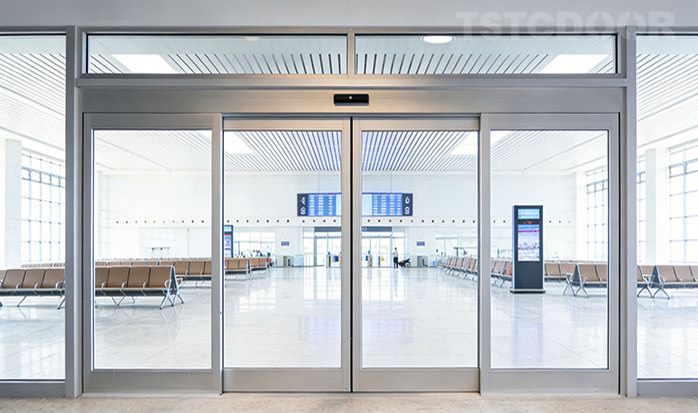
Overview
A sliding door operator is a mechanical and electronic system that automates the movement of sliding door leaves. These operators are widely used in high-traffic areas such as supermarket |retail stores, hospitals, airports, metro station |BRT station and office buildings, providing smooth, reliable, and safe door operation. They can handle heavy doors, support multiple configurations, and integrate with access control or security systems.
Key Features
▪ Modular Design: Many operators, like the ASSA ABLOY SL500 , Dormakaba ES 200, KBB KS3000, TSTC TS300, feature modular components that allow customization for different door sizes, weights and track heights.
▪ Weight Capacity: Operators can manage doors weighing up to 200 kg or more, ensuring suitability for heavy-duty applications.
▪ Safety Compliance: Products are tested to international standards, ensuring safe operation in emergency exits and high-traffic areas.
▪ Quiet and Smooth Operation: Modern operators use advanced motors and microprocessors to control opening and closing speeds, minimizing noise and wear.
▪ Remote and Centralized Control: Some systems allow remote programming and management of multiple doors from a single control unit, enhancing convenience and operational efficiency.
▪ Integration Options: Sliding door operators can be integrated with access control systems, safety sensors and energy-saving devices.
Types of Sliding Door Operators
▪ Standard |Ordinary Sliding Operators. Designed for single or double doors, suitable for most commercial entrances. Like KBB KS3000, TSTC TS300 Automatic Doors .
▪ Telescopic Operators. Such as KBB KS4000 or TSTC TS800, which allow a wider passage in limited space by using overlapping door panels.
▪ Residential Operators. Compact and slim designs for home use, often with maglev or linear magnetic drive actuators.
Applications
▪ Commercial Buildings. Supermarket |Retail stores, shopping malls, and office entrances benefit from automated doors for accessibility and traffic flow.
▪ Healthcare Facilities. Hospitals and clinics use operators for hygiene, hands-free access, and patient safety.
▪ Transportation Hubs. Airports, train stations, BRT stations require durable operators for continuous high-volume use.
▪ Residential Use.Home sliding doors can be automated for convenience, security and accessibility.
Purchasing Considerations
When selecting a sliding door operator, we should consider the items as below .
▪ Door weight and size .
▪ Traffic volume and frequency of use .
▪ Safety and compliance requirements .
▪ Integration with existing access control or building automation systems .
▪ Maintenance and service support, especially for high-traffic or critical applications .
Modern sliding door operators provide a combination of reliability, safety and flexibility, making them suitable for a wide range of applications from residential to heavy commercial use. Choosing the right operator ensures smooth operation, energy efficiency, and enhanced user experience.


