To the hospital ward doors /manual swing doors from TSTC, the mostly used 2 materials are galvanized steel and aluminum . What about the differences between them ? The answers are as below .
1. Aluminum Ward Doors
The aluminum ward doors here are the ones that both leaf panels and door case are aluminum alloy sheets, the detailed structure are as below .
Face panel: 3003 anti-rust aluminum sheet / 5052 aluminum alloy sheet, standard thickness 1.2~1.5 mm.
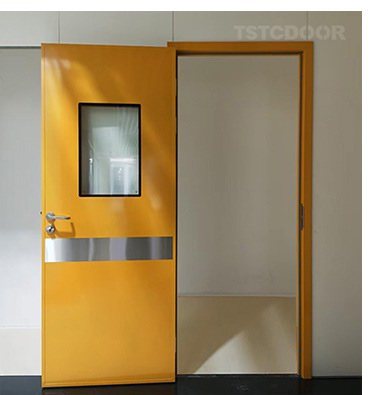
Door case & extruded profiles: 6063-T5 extruded aluminum alloy profiles .
Inner filling: Aluminum honeycomb core (lightweight and flame retardant) .
Surface finish: Antibacterial polyester electrostatic powder coating, identical to the coating process of galvanized steel doors.
▪ Advantages
Zero rust risk: Top choice for coastal hospitals, dialysis rooms, wards adjacent to restrooms, and high-humidity fever clinics.
Light weight for effortless operation: Aluminum doors are 40% lighter than steel doors of the same dimension.
Superior resistance to disinfectant corrosion: Aluminum base material boasts better chemical stability than steel. Long-term wiping with 84 disinfectant and chlorine-based disinfectants will not erode the substrate.
Non-magnetic and anti-static, suitable for laboratories and wards around radiology departments.
Integrated seamless bending structure with rounded R corners, no dust accumulation dead corners, meeting high hospital infection control standards.
▪ Disadvantages
Inferior impact resistance to galvanized steel: Aluminum is relatively soft and prone to dents under heavy impact from metal hospital trolleys,not recommended for standard multi-patient wards.
Higher cost: 40%~80% more expensive than DC51D+Z powder coated galvanized steel doors of identical specifications.
Limited fire resistance performance: Class A fire rating is hard to achieve; most products only reach Class B1 flame retardant grade.
Dents caused by sharp hard impacts cannot be repaired.
2. Galvanized Steel Medical Doors
▪ Structure
Door leaf: 0.8 ~1.0 mm hot-dip galvanized steel sheet with jointed seamless folding / integrated bending, inner core filled with paper honeycomb, aluminum honeycomb or sound-insulating rock wool.
Door case: 1.2~1.5 mm galvanized steel sheet with antibacterial electrostatic powder coating, wood grain transfer printing or film lamination finish.
▪ Advantages
Best cost performance, top choice for mass hospital construction projects.
Galvanized coating provides rust resistance, tolerates long-term wiping with 84 disinfectant, alcohol and chlorine-containing disinfectants.
High structural strength, resistant to impacts from hospital beds and trolleys, available as Class A fire-rated door.
Moderate overall weight for effortless manual swing operation, maintains shape after hundreds of thousands of opening & closing cycles.
Rich color options, wood grain transfer finish delivers warm texture similar to solid wood doors.
▪ Disadvantages
Cold metallic appearance, extra thick sound insulation wool is required to improve acoustic performance.
Prone to dents under heavy impact from sharp hard objects.


